
Accelerated Hypertension Uncovers Renal Artery Stenosis in 45-Year-Old Woman
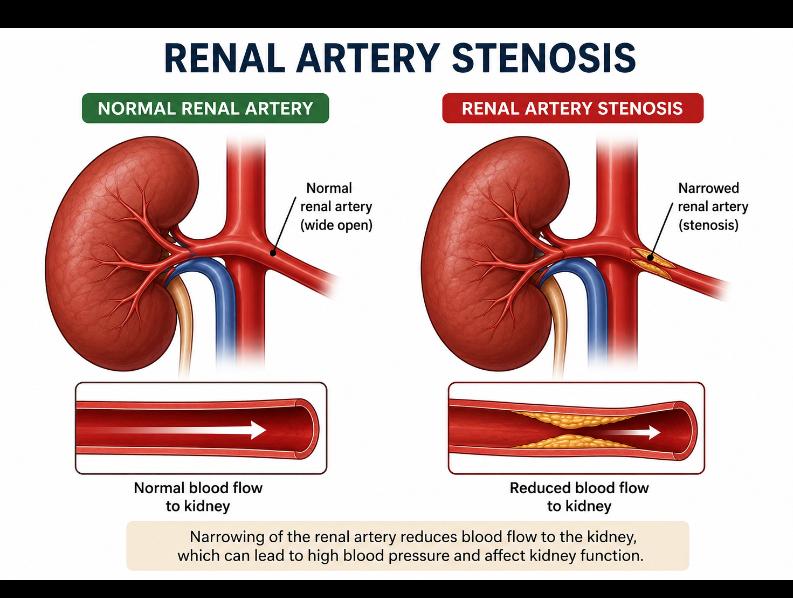
ACCELERATED HYPERTENSION LEADS TO DISCOVERY OF RENAL ARTERY STENOSIS
ROUTINE EVALUATION REVEALS 60% LEFT RENAL ARTERY NARROWING WITH CHRONIC RENAL INFARCTION
A 45-year-old woman was diagnosed with left renal artery stenosis during evaluation for severe accelerated hypertension, highlighting the importance of identifying secondary causes of high blood pressure.
The patient presented with blood pressure readings of up to 200/120 mmHg despite treatment with multiple antihypertensive medications. Contrast-enhanced CT angiography revealed approximately 60% ostial stenosis of the left renal artery along with evidence of a chronic left renal infarction.
Despite these findings, renal function remained preserved. Serum creatinine levels were normal, there was no proteinuria, and both kidneys were normal in size. The patient was started on medical therapy with telmisartan and prazosin, achieving excellent blood pressure control with current readings around 120/80 mmHg.
Key Clinical Findings
- Severe accelerated hypertension (200/120 mmHg)
- 60% ostial stenosis of the left renal artery
- Chronic left renal infarction on CT angiography
- Normal serum creatinine and preserved kidney size
- No proteinuria
- Blood pressure successfully controlled with medication
Speaking about the case, the treating team noted that renal artery stenosis is an important and potentially reversible cause of secondary hypertension. Early recognition is particularly important in younger patients presenting with severe or resistant hypertension.
Based on preserved kidney function, absence of proteinuria, stable renal size, and excellent blood pressure control with medical therapy, the patient was managed conservatively with regular follow-up rather than immediate renal artery stenting.
Clinical Message
Patients with severe or resistant hypertension should undergo appropriate evaluation for secondary causes, including renovascular disease. Timely diagnosis and individualized management can help prevent long-term cardiovascular and renal complications.
Outcome
The patient remains clinically stable with well-controlled blood pressure and preserved renal function on follow-up.